
This article originally appeared on our Kordz partner site. Read the entire article on the Kordz.com website. Visit the Kordz.com website to directly subscribe to handy articles and white papers about technology and topics affecting the integration community.
In today’s always-connected world, the performance of a network is only as strong as the infrastructure behind it. For integrators, designing and installing reliable IP networks is no longer optional—it is the foundation of every successful project. Poor cabling decisions and shortcuts inevitably lead to slow performance, troubleshooting visits, and dissatisfied clients.
At Future Ready Solutions, we believe a well-engineered network should quietly do its job for years without intervention. That reliability starts with a clear understanding of structured cabling, quality components, and best-practice installation. When paired with premium infrastructure partners like Kordz, integrators gain the performance headroom and consistency needed to build networks that last.
This article focuses on the internal IP cabling infrastructure inside a building or home—not how internet service arrives at the property, but how data is distributed from that point forward to every connected device.
>
What is IP Connectivity?
IP connectivity is the physical and logical framework that allows devices to communicate using the Internet Protocol. It supports everything from email and file sharing to streaming media, cloud computing, security systems, and smart building automation.
As technology adoption accelerates, networks are under constant pressure to deliver higher speeds, lower latency, and greater reliability. A robust cabling infrastructure ensures that data moves efficiently between devices without errors or bottlenecks. When outages make headlines, they highlight just how dependent modern life has become on stable, well-designed networks.
For integrators, mastering IP connectivity means understanding:
- Network layout and topology
- Structured cabling design
- Component performance
- Installation standards and testing
>
Wiring Layouts of IP Networks
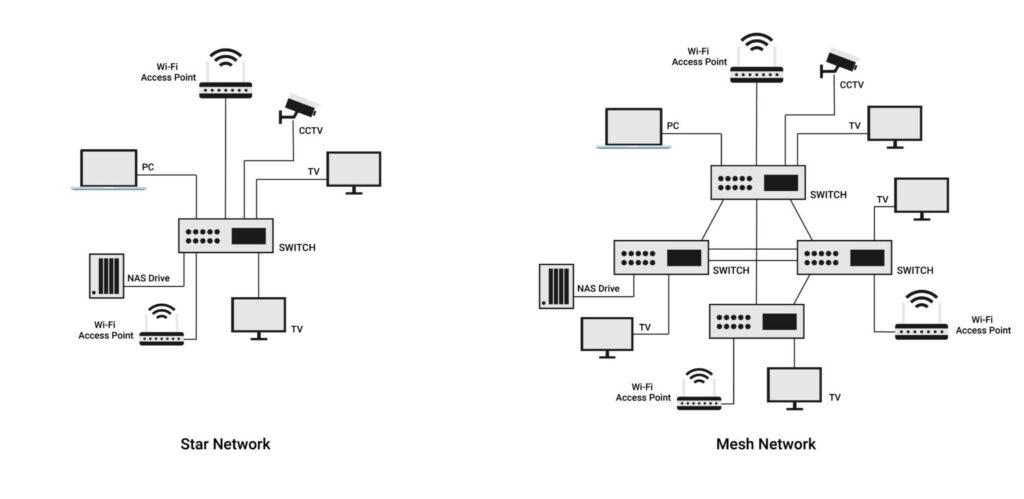
Every IP network is built around a topology, or the way devices and switches are physically connected.
In a star topology, each device connects back to a central switch. This design is simple to deploy, easy to troubleshoot and highly scalable. If one cable fails, only that device is affected. The tradeoff is that the central switch becomes a critical point of reliability, which is why professional-grade hardware and cabling are essential.
Modern commercial and high-performance networks often use a mesh of interconnected switches. This creates multiple data paths, greater fault tolerance and improved traffic efficiency.
While end devices still connect in a star configuration, the interlinked switches allow data to reroute dynamically. This design requires advanced planning and configuration but delivers significantly higher resilience.
Future Ready Solutions typically recommends mesh designs in environments where uptime, bandwidth and scalability are mission-critical.
>
Permanent Link vs Channel vs Components
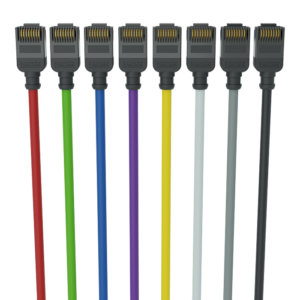 Understanding structured cabling terminology is key to building reliable networks.
The permanent link is the fixed cabling installed in the building including horizontal cable, termination jacks and patch panel connections. This is the portion that is certified after installation and is expected to remain unchanged for the life of the infrastructure. Its quality directly impacts every device on the network.
The channel is the complete signal path from the device to the switch. It includes the permanent link and the patch cords at both ends. Channels introduce flexibility but also variability, making component quality even more important.
Components include bulk cable, patch cords, connectors, outlets and patch panels. Premium components, such as those from Kordz, deliver tighter tolerances, better shielding and superior consistency. This creates performance headroom that protects the network from degradation as demands grow.
>
Cabling Standards that Protect Performance
Professional networks are built on globally recognized standards developed by organizations such as TIA, ISO, and IEC. These standards define maximum cable lengths, performance limits and testing requirements.
Key standards include:
- TIA/EIA-568 – widely used in North America
- ISO/IEC 11801 – international structured cabling standard
- EN 50173 – European equivalent
Compliance ensures predictable performance, long-term compatibility and future readiness. Standards focus on electrical and optical performance, not fire safety or building codes, which are governed separately.
>
Best Practices for Installation
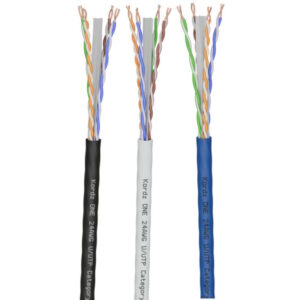 A network is only as good as its installation. Even premium cabling can fail if installed incorrectly.
One of the most crucial aspects of network cabling is proper cable management. It’s important to maintain proper bend radius, avoid excessive tension, label all runs clearly and use structured pathways. Clean cable management improves reliability, serviceability, and professionalism.
Second, it’s critical to avoid interference. Keep data cables separated from power, cross power lines at 90 degrees and avoid parallel runs where possible. Perfectly aligned cable dressing may look impressive, but tight parallel layouts can increase crosstalk. Performance should always take precedence over aesthetics.
Third, following correct installation techniques is vital for maintaining the integrity of the network. Preserve cable twist, use quality connectors, avoid conductor damage and test every termination. This is where high-grade components from Kordz make a measurable difference.
Fourth, once the cabling system is installed, it is important to perform regular testing and certification to ensure that it meets the required standards and performance criteria. After installation test for attenuation, check for crosstalk and verify performance class. Certification protects both integrator and client by proving standards compliance.
Finally, maintaining thorough documentation of the cabling system, including diagrams, specifications and test results, is a best practice that facilitates future maintenance and troubleshooting. Documentation simplifies future expansions and troubleshooting.
>
Common Network Issues
Even well-designed networks face challenges. Common network issues include cable damage from poor handling or aging, EMI interference from electrical systems, configuration errors in switches and routers, bandwidth congestion from network growth and component failure over time. Most performance problems trace back to cabling shortcuts or low-grade components.
>
Diagnostic Tools and Techniques
 Effectively troubleshooting network issues requires a combination of knowledge, experience and the right tools. Here are some key diagnostic tools and techniques used in identifying and resolving IP network problems:
- Ping / Traceroute – verify connectivity paths
- Cable Testers – detect wiring faults
- Network Analyzers – diagnose traffic and protocol issues
- Monitoring Software – proactive fault detection
- Loopback Tests – validate network interfaces
- Firmware Updates – prevent security and stability issues
These tools allow problems to be isolated quickly, minimizing downtime and disruption.
>
Why Quality Infrastructure Matters
The cost of one service callback often exceeds the price difference between standard and premium cabling. Investing in professional-grade infrastructure:
- Reduces failures
- Protects reputation
- Increases customer satisfaction
- Supports future upgrades
This is why Future Ready Solutions partners with manufacturers like Kordz, whose products are engineered for consistency, durability, and performance headroom—not just minimum compliance.
>
Conclusion
IP connectivity is the backbone of every modern building and smart home. It supports the technologies people depend on every day, yet it often remains invisible until something goes wrong.
By applying structured cabling principles, selecting premium components, following industry standards, and executing professional installation practices, integrators can deliver networks that are stable, scalable, and future-ready.
At Future Ready Solutions, we design networks to perform today and adapt tomorrow. With infrastructure partners like Kordz, we build systems that quietly, reliably and efficiently support everything our clients connect to them—now and well into the future.
This article originally appeared on our Kordz partner site. Read the entire article on the Kordz.com website. Visit the Kordz.com website to directly subscribe to handy articles and white papers about technology and topics affecting the integration community.