

This article originally appeared on our Kordz partner site. Read the entire article on the Kordz.com website.
As we discussed in a previous article, most issues can be traced back to fundamentals like chain length, handshake errors or electrical noise. Get those right, and you will often restore stability quickly.
Unfortunately for integrators, not all HDMI failures are that straightforward. Some systems pass the basics and still misbehave—showing sparkles, dropping resolution or refusing to hold ARC. These are the frustrating problems that separate quick call-backs from real system design challenges that can chew up not just minutes – but hours – of your time.
In the following article, we will walk through some more complex HDMI failure modes. We’ll look at why they occur, what they mean for system reliability, and how you can methodically deal with them in the field.
FRL vs. TMDS: Why Faster Isn’t Always Easier
Firstly, the theory: HDMI has two ways of moving data. TMDS, the older method, carried signals reliably up to 18 Gbps. It’s continuous, clock-driven and relatively forgiving. FRL, the newer method, is packetized, embeds the clock in the data, and uses four lanes to achieve higher speeds.
On paper, FRL is more efficient. In practice, it is far less tolerant of timing issues. Every lane must train and lock before data flows, and the system will not display anything until that process is clean. That’s why FRL-based systems feel “all or nothing” compared to TMDS.
- If a 4K120 system is unstable, reduce the data rate and re-test.
- Reintroduce devices one at a time — each hop increases training complexity.
- Treat FRL systems as less forgiving than TMDS; margins are smaller.
Sparkles and Pixelation: Warning Signs You Can’t Ignore
Years ago, sparkles in the image were the classic sign of TMDS struggling with errors. Today, with improved equalization, they’re less common, but when you do see sparkles or pixelation, it still means the link is at its limit.
Pixelation tells you the system isn’t dead, but it’s operating inside a margin that cannot hold under real-world conditions. Ignore it, and dropouts usually follow.
- Test with a shorter, known-good cable to confirm its margin, not devices.
- Move HDMI runs away from noisy LED drivers or mains cables.
- Compare performance with environmental loads on and off (lights, appliances).
- Unstable connections will degrade over time, so try to get them right before leaving them.
When 4K Becomes 1080p: Understanding Resolution Downshifts
Few things frustrate clients more than a 4K system defaulting to 1080p. To the integrator though, it’s not random – it’s the way HDMI is designed.
In an HDMI system that shares a single source device, the system will always drop to the lowest common denominator in the chain. If even one device reports 1080p capability, the whole system follows. Yes, you can insert EDID managers or scalers to override this, but they add latency and consume margin. Each fix adds another potential problem.
- Prove the source and display can pass 4K point-to-point.
- Add EDID management only when absolutely necessary.
- Re-test stability after every added device; each consumes headroom.
- Switching the system to 1080p can provide instant stability whilst you work out the problems to get it back to 4K.
ARC and eARC Headaches: Why Audio Return Fails When Video Works
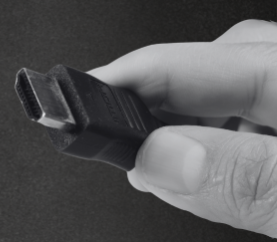 ARC (in common mode) and eARC repurpose the HDMI Ethernet channel pair in cables to carry high-bandwidth audio back from the TV. The challenge is simple: TVs don’t output as much current as source devices.
That means ARC and eARC often fail on longer paths even when video works perfectly in the forward direction. This is why clients are often confused: “The picture’s fine, why isn’t the sound?”
- Keep ARC and eARC return paths as short as possible.
- Remember: a TV’s weaker output makes long runs unreliable.
- Don’t assume video success means ARC or eARC success.
- Commonly, you may need to install active electronics for cables longer than 10m to return audio reliably.
Out of Sync: Why Audio and Video Don’t Always Show Up Together
Modern HDCP is relentless. In the early days, authentication was checked every 120 frames or couple of seconds. Today, re-checks happen constantly in microsecond intervals due to more devices and higher frame rates.
The margin for response is so small that if timing slips, video or audio may mute independently. This leads to one of the most puzzling HDMI failure modes: picture with no sound, or sound with no picture. This is probably one of the hardest issues to explain to clients because there’s no visible error message – just silence or a blank screen.
- Simplify the chain: reduce complexity by removing unnecessary devices and test each device directly.
- Use hot-plug resets to trigger a clean re-authentication.
- Watch for timing clues, such as audio starting long after video, sparkles in video or flaky audio.
Gaming Glitches: When Variable Refresh Rate Breaks HDMI
Variable Refresh Rate (VRR) is designed to improve smoothness in the gaming experience but it comes at a cost. Every time the frame rate shifts, the system renegotiates. In marginal HDMI chains, this repeated negotiation can cause instability.
- Lock the source to a fixed refresh rate to test stability. If the issue disappears, VRR is exposing system margins.
The Cable Question: Is Your HDMI Link Built to Survive?
Finally, most failures come down to the cable. Integrators never see what’s inside the jacket, but tiny variances in a cable’s construction and quality can add up to significant installation headaches: mismatched twist rates, shielding gaps, inconsistent copper purity or thickness, or bends that change impedance.
At low data rates, these issues hide. At 48 Gbps, they surface as intermittent failures that can be near impossible to trace without swapping the cable. This is a very frustrating problem for integrators because the problem is hidden inside the cable jacket.
- If every other factor has been ruled out, replace the cable.
- Use a cable engineered for real-world reliability, not just labelled for speed.
- Avoid kinking, folding or bending cables beyond their design.
- Treat cables like the expensive electronics you install: 48Gbps (now 96) in real time is no joke. Compare that to your buffered internet signal!
Field Fixes: Fast Ways to Stabilize a Failing Link
Not every fix is permanent, but these hacks can buy you time or confirm a diagnosis:
- Lower video resolution to see if stability returns
- Lower frame rate, as Bluray or most video is created in 24fps anyway
- Lower Chroma to 420, as Bluray or most video is created this way
- Lower color depth to 12 bit for Dolby Vision or 10 bit for HDR10+
- Simplify system design – not everything needs all these devices or resolutions
- Use multiple systems for multiple locations
- Keep cable runs short
- Run passive cables where possible
- Do a Hot-plug reset to clear stuck handshakes
- Run built-in cable tests on devices that support them.
Takeaway for Integrators
 Complex HDMI failures are rarely as random as they may appear. They’re the result of tiny margins being eaten away in FRL training, HDCP timing, ARC return paths, noisy environments or inside the cable itself.
For integrators, the key is a methodical approach to troubleshooting. So, simplify where you can, control the environment, and treat every symptom as a vital clue to solving your problem. That’s how you transform ad-hoc HDMI issues into performance protocols you can not only tackle – but master.
These are the same fundamentals we apply at Kordz when we design, engineer and test our products. Our goal is to equip integrators with connectivity that works reliably in the real world, not just in the lab. Learn more about our award-winning product at FutureReadySolutions.com.
This article originally appeared on our Kordz partner site. Read the entire article on the Kordz.com website.